Journal of. Published under the auspices of the HiSky* Trust, founded 1957 to promote disorder. (*Hiss-Key)
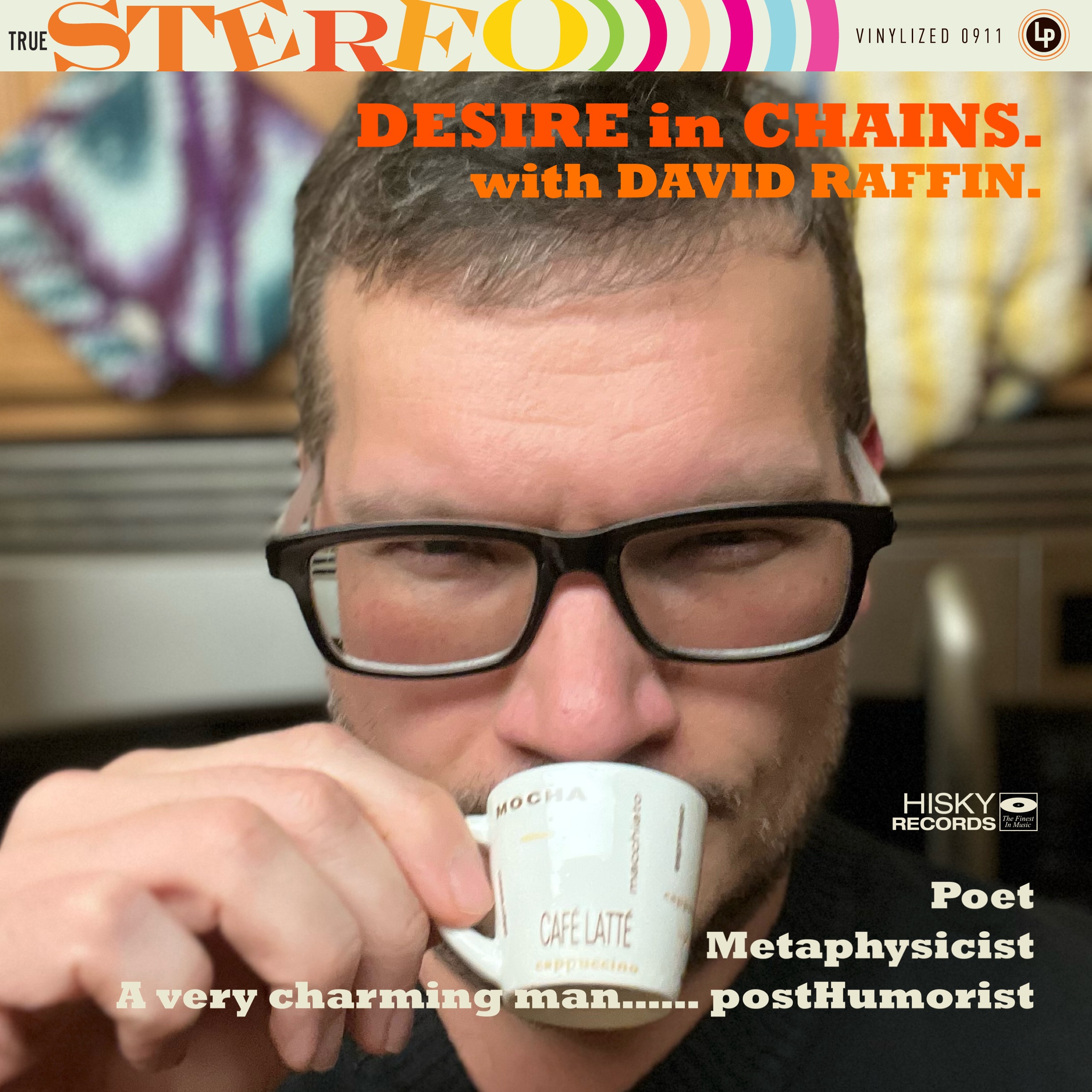
David Raffin (postHumorist, poet, Metaphysicist)
(*Metaphysics : Branch of philosophy dealing with first principles: abstract concepts such as being, knowing, substance, cause, identity, time, and space.)
Mother Jones used to march down the street to protest. Never looking back to see if anybody was following her. They called her the most dangerous woman in the world.
I almost put her in my novel, Lonesome Travelers. From before. Before she did those things. When her whole family died in a plague. And she sat in the house with their bodies. Mark on the door. Plague. Waiting.
Rabbit needed a place to rest. And the safety in the open was a matter, as usual, of grave importance.
So he claimed the right of the land and began to dig. Down. Sloping down. Into the cool and welcoming Earth. Some creatures were displaced, with as much grace as could be administered in the circumstance, and the network of tunnels joined the network of tunnels that formed the local underground. A refuge of perpetual night.
One digs to escape, dig it?
There were moles in the underground.
It was to be expected. As the Rabbit was relaxing after a cool dig, in the splendor of his new digs, one of the moles literally tripped over him.
“I say, who’s there?” shouted a mole in a hoarse whisper.
“I am just an adventurer,” said the Rabbit. “I am not a fighter.”
One digs to escape, dig it?
“Well, sir,” said the mole, “you are a malingerer! Hiding away from the troubles of the world! A shirker. What do you say for yourself?”
“At the moment,” said Rabbit, “nothing.”
The accusation was not without some merit.
“Deadly silence,” said the mole.
And there were dim eyes all around. They shone in the light of the Fire. In the underground. There were moles in the underground. Suspicious. For good reason.
One digs to escape.
“We are the consolidated underground,” said the mole. “We are what is left of those who came before. Scraps. Bits and pieces.”
“Where will you go from here?” asked Rabbit.
“Onward,” said the mole. “To the inevitable ending. We fight no longer to win, no longer is it personal survival which drives us. We fight especially hard when we cannot win, for then our actions matter even more. For then it is a matter of righteous history.” He shrugged his slight shoulders. “We travel the underground. It provides escape routes and comfort. Comfort is, you know, fleeting in this world.”
Among the moles were scattered others. To the far side was a shrew. Her eyes illuminated and flickered reflecting the Rabbit’s light.
Dig it?
“Now,” said the mole, “we construct the story of our glory. Battling against great odds we keep true to our ethics. And hope that our ideals emerge victorious. You see young Vanja. She joined us after her village was destroyed. We have scattered into cells and travel the tunnels. We emerge one at a time and tell our story at random locations, to random listeners. Then we retreat back underground. It is the only way. Vanja is particularly adept at this kind of warfare. It is like starting a thousand fires. It is uncontrollable. It is unconquerable.”
“Have you heard,” said Vanja, “the song of the traveler? It is reverberating everywhere. The traveler landed in a field. Fell out of the sky. And arose. It was a celebratory feast the traveler had landed on the outskirts of. There were park benches and food. Flowers. And merriment. But the traveler saw above the festivities hung the body of a man, dangling over the events. Still. And no one else gazed toward the sight. Instead, children played and lovers fraternized, even quarreled over trifles, while above the man twisted in the happy breeze. And the traveler said, ‘Who is that man? Why does he hang around here?’ And the crowd turned ugly. For it was not a topic of polite conversation. And words were minced. And there were misunderstandings and malice. And the traveler left, for it was not the destination, you see, but afterward people kept looking at the hanging man, who they had previously forgotten. And they were ashamed. But they did not know what to do about it. And that is how the picnic was spoiled, but there were disagreements about why.”
“I’ll take the shooting. I’m used to that. I’ve been shot a few times in the past, and I guess I can stand it again.”
—Joe Hill
I was born Joel Emmanuel Hägglund but more commonly I was also known as Joseph Hillström. But to my people I am known as Joe Hill. Always will be. Born in Sweden, 1879. Killed, some say, in the unholy state of Utah, by the Starvation Army, 1915. Still, here I am. Very revealing. My popularity? As it is, I attribute it to the value of my message. Do you know my friend Fred Hampton? He said, “You can kill a revolutionary but you can’t kill a revolution…you can jail a liberator but you can’t jail liberation.” I wish I’da said that. But I got a lot of good ones myself, and I begrudge nothing from my good comrades.
That is what I said, about getting shot, to the judge in Salt Lake who sentenced me to death because I was a revolutionary. That wasn’t the crime, it rarely is. Subterfuge is the greatest ally of the oppressors. Smoke and mirrors. Carrots and sticks. Illusions. Truth the greatest aim of the revolution. The truth of the Unity of all life. Forget that and risk the future. Betray the revolution. Those who control the narrative try to drown out the signal. Power is very corrosive. The replacement they offer is plentiful without being satisfying, profits out of balance. A comrade, regardless of the propaganda, is an individual dedicated to Unity and charged to work toward the elimination of all needless want.
You know what I have? A song in my heart. Each chorus built of individual voices, brought together for a higher purpose. A guitar has multiple strings which work together to strum. A ballad of love a lament of martyrdom. If one knows no words they can always hum. In time the words will reemerge to make manifest.
A song is repeated more than any speech. It gets stuck in the head. It trans-mutates. It triggers. Triggering is the full focus of the true artist, who is by necessity a subversive. A revolutionary. A true artist is so far along the trail they are as likely to be hated as lauded. Revolution requires time.
My friend Thomas Merton says, “Art enables us to find ourselves and lose ourselves at the same time.” Both important pastimes. Sometimes the most productive thing is to pass the time.
A lot of my songs are parodies of the songs of the Starvation Army. A counter-point. And which are remembered? Mine are. I made Casey Jones a union scab. I pointed out the irrelevancy of pie-in-the-sky on an empty stomach. A karmic I-owe-you dishonored.
But the act of creation allows one to change a thing into another, to trans-mutate. For all intents and relevant purposes. There is nothing but change. Stability is an illusion. There is the past, the future, the now, the then, and the ideal. Some look in the past to find the ideal, some to the future. And they will fight over it. Fight over something which isn’t there, which exists only in the boundaries of the mind. Fluid. Even the ideal of the past never really existed. We almost always remember better the good. Or envision it. But sometimes you have to look at the bad. There is no other way to address it. Ignoring it with your head in the sand, digging down to make a hole, a home, albeit temporary, is rarely the best option. It is best to have an ideal. A good one. Always a good one. The best. Something to live up to.
I always tried to make friends wherever I went. It was easy for me, in a way, because I brought the music. Still, I was poor, an itinerant worker. So were my people, my audience. Listeners, backup singers. I joined the IWW, the Wobblies, the One Big Union. I cartooned for their newspaper. Our newspaper. And I wrote songs printed in their Little Red Songbook. Our Little Red Songbook. A songbook for all the people. Many printings, still sought after today.
I was an immigrant. A Swedish speaker. But I learned English as I traveled the country and became an artist in a new culture. But we were hated. By some. Loved and aided by others, those disposed to Love.
When a town, controlled by the robber barons of the local industry (and were there ever a shortage of such!), declared the union illegal, when they pledged to jail all unionists, the call went out through the IWW and the Wobblies surged to town. We filled the jails. We overwhelmed the system. We broke them when they tried to break us. We stripped them of their only dear possession: money. And if they would not share it they would lose some by protecting it, watch it drain away. But they took solace they were still not sharing! And what is money but an imaginary marker of time, time transferred from the worker to the robber barons so they can stockpile other people’s time. Think of themselves as timekeepers. Regulators. Lords. Leave the time to their heirs. Build shrines to their own glory as many starve. We would not allow such oppression to stand unchallenged.
I could not be there, but in 1919 the city of Seattle stopped for five days in a general strike of fellow workers. Wages frozen by years of what they called a “Great” war, an innovation on the old, the authorities were content to starve the workers to feed the war. And the workers rose up. It was part of the larger struggle, same as the Diggers on Saint George’s Hill in 1649. Two years later, in 1921, the sailors joined the people in Kronstadt in a rebellion against the Soviet government because they also failed to feed the people, having established a new class structure to replace the old, as the revolution spun. Out of control.
I provided anthems of resistance which reverberate through time.
I observe, report, pass it on. Pass it on.
The world is divided between the haves and the have-nots. Their numbers are not equitable. The larger class serves the smaller. The larger class makes possible the luxury of the smaller. The system functions to serve the smaller class. They control it. It is sold as the natural order.
Many are employed as servants, but over time things do change. While today there are still many servants employed by the leisure class, more and more workers toil on factory floors. Construction. Building the future worker’s state under the nose of the taskmasters.
Times change. The hermit is on the wane. Hermitages. Men (men only for it is a sexist trade, as men are not employed in whore-houses, to each opposite work) employed by the manor born to live in a shack (a hermitage) on the outskirts of the estate. Near the road in. To be seen, but not heard. Split from the herd. Kept isolated. Alienated from his fellow workers as well as his product. What is the product? Possession. Alienated even from human touch. That is one way to impede the spread of the resistance, One Big Union.
But no more – they won’t even let a man alone!
Now one must be cramped alone together, closed in, alone in the crowd, still alienated from the fruits of their own labor. Revolution. Revolution. Revolution.
I was arrested.
I was not charged as a revolutionary, though, as I say, that was the true charge. It was a matter of the honor of a good woman.
So when they asked, and they asked, “Did you kill that man? Did not he shoot you and wound you?” In various formulations I said, “I am innocent of this charge. I have robbed no store and shot no shopkeep. My injury is honest; as am I.” For this was a different matter which were none of their concern and risked the reputation of a fine lady. And I had earned this gunshot wound piercing my lung in order to protect her honor, as I would face the next.
I would not tell them the truth. The story of the triangle. The woman. The other man. Which was nowhere near the shopkeep’s end.
The boy eyewitness, after brought to look at me, said, “That’s not him at all!” But he changed his song when they reasoned with him. Though I had no motive. And there had been no robbery. And I was not there.
I will tell you, brothers and sisters, to not waste time mourning my body but to busy yourselves organizing the greater resistance.
I told my friend Big Bill Haywood, “Could you arrange to have my body hauled to the state line to be buried? I don’t wish to be caught dead in Utah.” He told me he would arrange to have my ashes divided up into 600 small packets to be mailed to union locals around the world.
I never used to brag about my society of professional journalists award. For excellence in journalism. Until America’s newspapers ceased to exist. Now it’s a fun thing to say. An ICEbreaker.
I also never used to brag about my “very high IQ” “top 1% in the nation,” Until, of course, people kept telling me how smart the billionaires were. And they AREN’T people.
I used to think that kind of bragging was gauche. But then I realized Americans just love it more than anything they love to be told other people are better than them and they love to be submissive. They love authority.
“And so it came to pass that the breakfast burrito became the dominant life-form on the planet.”
–Richard Lindsay
And the breakfast burrito began to speculate as to who made the breakfast burrito.
And there were differences of opinion.
And then there were terrible breakfast burrito wars.
And breakfast burrito fought breakfast burrito.
And some breakfast burritos were more equal than other breakfast burritos, no matter what lip service they received.
And there was a breakfast burrito dark age.
And there was a breakfast burrito enlightenment.
And a lot of breakfast burritos lost faith.
And there was a breakfast burrito golden age.
And the breakfast burritos became decadent.
And thus our story opens on a world full of brazen, decadent, hedonistic breakfast burritos– in pursuit of nothing but the ultimate pleasure.
***
Two breakfast burritos sat in a dimly lit room, each filled with passions only fully felt by their kind. They were saucy. They experienced a burning within.
At last one of the burritos dared speak its mind. “I hunger.”
The other replied, “I, too, hunger, passionately.”
“What is to be done?” moaned the first.
“The solution is simple,” said the second. “We eat.”
“What is it we shall eat?” said the first.
“We shall eat each other,” said the second.
“Oh, the shame!” said the first.
“It is a necessity!” cried the second. “There is no shame in necessity!”
“How shall we proceed?” said the first.
“We shall position ourselves in such a way that we may comfortably eat each other,” said the second. “We shall lay beside each other, each facing the opposite way.”
“Not the fabled ‘11’ position?” said the first.
“The same,” said the second.
“I am afraid!” said the first.
“You are a prude,” said the second. “You act as if you have never eaten another burrito!”
“You have ruined this role-play!” said the first.
“It isn’t working for you?” said the second.
“It was, but then you ruined it,” said the first. “You had to go all metafictional.”
“I am a modern burrito,” said the second.
“I am a classic burrito,” said the first.
“You filthy, loose burrito!” shouted the second.
“On with the sex already,” said the first burrito coldly. “I have tired of this game.”
***
For millennia burritos had no individual names. Then arose a particularly kinky burrito. This burrito declared that in an age of hedonistic excess it was proper that a burrito should have a name. An individual name. A moniker. Thus he went by the name ‘William the Great.’ He also declared himself king over all burritos. This, however, was accepted by very few burritos. Those who did accept it were of a submissive nature.
William decreed that all burritos should have names. This was primarily to aid in the new practice of burritos selling other burritos into bondage. Burrito slavery.
***
“Breakfast burrito you are my brother.”
“No. I am brother to all breakfast burritos.”
“Then I am still your brother.”
“Do not labor the point.”
***
One day a breakfast burrito came home to find its love mingling with a fresher, more exotic breakfast burrito. It was the end of the perfect burrito relationship. Or the beginning.
***
“I cannot tell one breakfast burrito from another,” said a bean burrito. “They are all the same to me.”
“You are a racist!” replied a breakfast burrito.
“To me all breakfast burritos are equal. They are the same at the great table of the universe.”
“You are an egalitarian!” replied a breakfast burrito.
***
“Here is what we will do. We will refresh your filling. New rice and beans for old. New sauce. Not too much – not too little. Your choice of other fillings for a fee.” The burrito plastic surgeon was patient and understanding. “While we are exchanging your filling, we will refresh your flour wrapping. New skin for old.”
“But then, what will be left of me?” cried the middle-aged burrito. “If you replace my inside and my outside, what is left of me?”
“That is a question for the philosophers,” said the doctor. “But if you ask me, it leaves your soul. You will be reborn. As a newer, better, fresher burrito.”
“But will it not in fact be death?” cried the patient.
“I still believe in the great burrito maker in the sky,” said the doctor. “I am old fashioned, though I know it is against the ways of science. We were made by a greater burrito. You have nothing to fear. You will be born again.”
Then the burrito doctor tore apart the other burrito and made a new burrito. He told the new burrito it was the old burrito. And the new burrito believed.
***
“Burrito,” said one burrito, “You are rolled too tightly. Let it hang out.”
The other burrito let it all hang out. It was his undoing.
***
The burrito’s best and oldest friend is the tortilla chip. Though the chip sometimes jabs holes in its burrito companion. The burrito forgives this transgression. The chip, after all, is just a simple creature possessing only the base instincts. The burrito possesses the nature of forgiveness and grace, though throughout the world this does not keep one burrito from hurting and killing another, for either ideological reasons or for sport.
***
“If a burrito had wings it could fly.”
“You are a fool. If a burrito were meant to fly, it would have wings.”
***
“Why do burritos exist?” asked the young seeker.
“To enjoy the hedonistic excesses afforded to them in the world,” replied the guru.
***
In the final burrito war, the war to end all burrito wars, hot oil was dropped on each side by the other. The burritos were flash fried. They were frozen where they stood or lay. They were crispy statues representing their civilization, culture, and technological advancements. Then the rains came. At last there was nothing left. It was as if there were never a burrito in the world. The lizards rose and they never knew of the burrito.
The burrito was forgotten. A burrito is but a momentary pleasure in the eye of the universe. Thus ends the lesson.
I am worried about the line of succession from the jolly green giant, who is king, king of the fields. I assume the heir apparent is his Bastard “nephew“ sprout. But he has been hanging out with bad actors, Excuse me, poor influences, like Kurt Cameron.
Now, why am I telling you this? It is because there are rumors the jolly green giant has played fast and loose with his pollination. And it is conceivable, conceivable, mind you, that he is the father to many (mini?) bastard cartoon mascots. Please help me determine them. Rule Vegittania!
And remember: There are no birds eyes in Birdseye brand frozen vegetables. It just says there are in an effort to log-in brand identity so the consumer will ask for something by name and accept no substitutes. And it’s working. Because here we are talking about frozen birds eyes.
A lector had been hired for the next day. To read both light entertainment texts as well as news of the day. The job was to read on the factory floor, a service to the workers, who often paid by cobbling together out of their own meager pay, collectively. A passing of the hat. To escape drudgery. People will pay for escape.
It was a hot day. Oppressive.
Birds ducked into crevices of buildings seeking respite. Shade.
It is quiet. No one wants to expend the energy. Stoke the fire dwelling inside.
The nearby library branch is full of people trying to beat the heat by reading it away. A process of illusion.
Inside the factory the sound was that of the clatter of machines. Adding to the heat of the day.
The factory manufactured waist-shirts, a fading fashion for women.
A man leaned out a window on the ninth floor. He filled his lungs with the warm air. The outside air. It is often a problem in cities, man-made shelters, cages, the matter of inside/outside air. Free circulation. The bird looked at him. He looked at the bird. There was a knowing. It passed between them.
The man looked up. The bird looked at the man. The man looked down. The man looked at the bird, wistful.
There was smoke coming out of some of the windows. There were sirens. Someone had noticed the smoke below. They saw the smoke above. Rising. There were people exiting the building. It was being evacuated. Emptied. Abandoned. Like leaving a sinking ship. They could not communicate with the ninth floor, only the eighth and tenth. There were fire trucks below, and men. And people were filing into the street from both directions, away from the building as well as toward it.
“Ladders!” And the ladders were set up. And they only reached to the sixth floor. A dead stop.
And it’s interesting because, if they had gone higher, people would have talked about the time they went down a ladder without ever having to climb up. Over tea. And people would be slightly amused. By the casual chatter. A tea-time observation. Quickly forgotten.
And there were more people at the windows. Breathing the warm air. Warmth being relative. And the birds saw people had gone to the roof. Unable to go down, they chose to go up instead. A few of them looked down. Among them were managers and they looked down at the people. Oddly, they were safe. But they did not feel safe. They would not feel safe for a long time after. They tried not to think of it, to shift their attention.
And they looked down at the street. And those on the street looked up at them. And the man at the window looked at the bird. And the bird looked at him. Knowing.
Not many people got to the roof that day. The stairwell leading to the roof became impassable right after the stairwell leading to the street. It took three minutes. There was another. Another stairwell. But it was chained shut. The supervisor who held the key had already left the building and was looking up from the street. Helpless.
There was a metal fire escape to the side, people climbed out onto it. So many tried to escape onto it that the metal structure groaned, and quickly, but in shocking slow-motion, failed catastrophically. Poorly constructed, as cheaply as possible, to save money, to increase profits, it gave way, crashing full to the street with screams from above and below. There were no survivors.
The elevator operators made three trips back up and down, through the heat and the smoke. They could not make a fourth. Between trips some of those left above had tried to slide down the cables to the top of the elevator cars. The weight of their bodies made the elevators inoperable. Human error. The heat melted the cables.
The fire licked out some of the windows, tasting the outside air.
The man looked at the bird. He jumps, defenestrating himself onto the street below. The bird watches from his perch. The man’s place at the window is filled by another. She will not be the last. In as much as a factory hand is replaceable.
The child found the bird dead. The child looked at the bird. Put it in a box. With some grass. Do birds eat grass? Looked at its beak and feet. Stiff bird. Relax. Things are well in hand. The child says a few words over the bird and makes some motions. A budding magician. Cigarette butts. Children believe in magic. Not magic as entertainment, but magic real. Trying to bring the bird back to life.
“Get away from that Nasty Thing!”
And it was left on top of a stacked square of bricks, salvaged from an old building. There was also a bucket of doorknobs.
A woman falls through the air, alight. Still burning on the street. A man and woman kiss before they jump together, holding hands. A courtship. A courtship beginning and ending. Still, on the sidewalk.
Blood flows down the gutter. To the sewer. Underground.
There is the sound, unforgettable. Of a body hitting the pavement from above. Onto other bodies preceding. An unsteady rhythm. A syncopation of the heart.
They tear right through the nets held by Firemen below.
Greenwich time. In the mean-time. They worked fifty-two hour weeks for seven to twelve dollars a week. The youngest were fourteen. Most were women between fourteen and twenty-three. The oldest was forty-three.
The owners had a history of suspicious Fires, after a product goes out of fashion, and with it the workforce. A matter of insurance, pending.
Louis Waldman, having followed the sound of sirens from the reading room said, years later, that being on the street at that time was a mad frenzy. An agonizing eternity. Hysterical. Men wept.
“Were the bricks from the Triangle building?” asks the attendant.
“Nah. Still there. Call it the Brown building.”
“But what of the Lecter?” asks the attendant. “The one who was to come the day after.”
“He was left to read on his own time,” says the Storyteller. “But was left much poorer for it.”
The Buddha sat under a tree. An apple fell on his head. It was the wrong tree. He ate the apple.
The Buddha sat under a tree. An apple fell on his head. It was Buddha-nature.
The Buddha sat under a tree. An apple fell on his head. He said, “I am not looking for gravity here.”
The Buddha sat under a tree. An apple fell on his head. He laughed. And said, “You have the wrong man here.”
The Buddha sat under a tree. An apple fell on his head. He said, “let’s not make a big deal out of this here.”
The Buddha sat under a tree. A fig Newton fell on his head. Followed momentarily by an apple Newton. Then, Isaac Newton. Who was quite out of sorts.
The Buddha sat under a tree. An apple fell on his head. He said, “Seriously?”
I would not joke.
Then he laughed.
At the end of the day, the Buddha had so many apples.
“How many apples did he have?” You may ask, in unison. This is crowd work. He is building a following now.
He had so many apples he gave most of them away.
He planted one. And it grew into a legend.
If an apple falls from a tree, and neither the Buddha nor Isaac Newton are there for it to land on, does it make a sound? What is that sound? Asking for one who seeks.
Every time I see an apple on the ground, I miss Isaac Newton, as did, likely, that apple. On the ground.
Every time I let go of my sadness regarding the apple and the absence of Isaac Newton, I see the Buddha.
With an Apple, you can see the world.
An apple sat under a tree. The Buddha fell on it. This world. Is upside down.
Every time I time travel, I do nothing. Because I did nothing the first time I time traveled. Now I have to do nothing. Otherwise I put everything at risk.
Something Might Happen. This Time.
An apple sat under a tree. The Buddha fell on it. Applesauce. Applesauce.
Spiritually enlightened applesauce. Can’t put a dollar value on it.










 David Raffin
 RSS - Posts