Journal of. Published under the auspices of the HiSky* Trust, founded 1957 to promote disorder. (*Hiss-Key)
David Raffin (postHumorist, poet, Metaphysicist)
(*Metaphysics : Branch of philosophy dealing with first principles: abstract concepts such as being, knowing, substance, cause, identity, time, and space.)
Joe points toward a statue of three joined entities. “The Three Graces,” says Joe. “Each based on the famous figure model Audrey Munson. Miss Manhattan.”
“Who is that?”
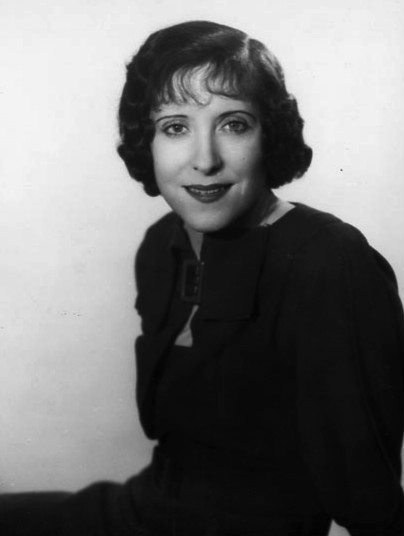
“She was a young woman who found fame, fabulous and fleeting, as an artist’s model. For she could stand stock still for many hours. Bear it all. Her likeness is scattered throughout the city and beyond. Her fame spread far-and-wide in her day. She was a star of the early silver screen. The flickers. The movies, pre-code movies, presumed lost for decades. In them she portrayed an artist model, nude.
She was arrested during the premiere of one of her own films, on a morals charge. Her career came to an end when a doctor she and her mother had been rooming in the house of murdered his wife so he could build a new life with Munson, though she knew nothing of the plot and had had no relations romantic with the man.
Later, she conducted a nation-wide search, public, for the perfect husband for her, but found no one. Her mother committed her to a lunatic asylum. She resided there for sixty-five years, until she died, forgotten, at the age of one-hundred-and-four. No one visited her for decades. But sometimes, the old lady would escape her confines, and walk to a nearby bar, where she told unbelievable stories about herself as a young, desirable, woman. Stories no one she talked to believed.”
A lector had been hired for the next day. To read both light entertainment texts as well as news of the day. The job was to read on the factory floor, a service to the workers, who often paid by cobbling together out of their own meager pay, collectively. A passing of the hat. To escape drudgery. People will pay for escape.
It was a hot day. Oppressive.
Birds ducked into crevices of buildings seeking respite. Shade.
It is quiet. No one wants to expend the energy. Stoke the fire dwelling inside.
The nearby library branch is full of people trying to beat the heat by reading it away. A process of illusion.
Inside the factory the sound was that of the clatter of machines. Adding to the heat of the day.
The factory manufactured waist-shirts, a fading fashion for women.
A man leaned out a window on the ninth floor. He filled his lungs with the warm air. The outside air. It is often a problem in cities, man-made shelters, cages, the matter of inside/outside air. Free circulation. The bird looked at him. He looked at the bird. There was a knowing. It passed between them.
The man looked up. The bird looked at the man. The man looked down. The man looked at the bird, wistful.
There was smoke coming out of some of the windows. There were sirens. Someone had noticed the smoke below. They saw the smoke above. Rising. There were people exiting the building. It was being evacuated. Emptied. Abandoned. Like leaving a sinking ship. They could not communicate with the ninth floor, only the eighth and tenth. There were fire trucks below, and men. And people were filing into the street from both directions, away from the building as well as toward it.
“Ladders!” And the ladders were set up. And they only reached to the sixth floor. A dead stop.
And it’s interesting because, if they had gone higher, people would have talked about the time they went down a ladder without ever having to climb up. Over tea. And people would be slightly amused. By the casual chatter. A tea-time observation. Quickly forgotten.
And there were more people at the windows. Breathing the warm air. Warmth being relative. And the birds saw people had gone to the roof. Unable to go down, they chose to go up instead. A few of them looked down. Among them were managers and they looked down at the people. Oddly, they were safe. But they did not feel safe. They would not feel safe for a long time after. They tried not to think of it, to shift their attention.
And they looked down at the street. And those on the street looked up at them. And the man at the window looked at the bird. And the bird looked at him. Knowing.
Not many people got to the roof that day. The stairwell leading to the roof became impassable right after the stairwell leading to the street. It took three minutes. There was another. Another stairwell. But it was chained shut. The supervisor who held the key had already left the building and was looking up from the street. Helpless.
There was a metal fire escape to the side, people climbed out onto it. So many tried to escape onto it that the metal structure groaned, and quickly, but in shocking slow-motion, failed catastrophically. Poorly constructed, as cheaply as possible, to save money, to increase profits, it gave way, crashing full to the street with screams from above and below. There were no survivors.
The elevator operators made three trips back up and down, through the heat and the smoke. They could not make a fourth. Between trips some of those left above had tried to slide down the cables to the top of the elevator cars. The weight of their bodies made the elevators inoperable. Human error. The heat melted the cables.
The fire licked out some of the windows, tasting the outside air.
The man looked at the bird. He jumps, defenestrating himself onto the street below. The bird watches from his perch. The man’s place at the window is filled by another. She will not be the last. In as much as a factory hand is replaceable.
The child found the bird dead. The child looked at the bird. Put it in a box. With some grass. Do birds eat grass? Looked at its beak and feet. Stiff bird. Relax. Things are well in hand. The child says a few words over the bird and makes some motions. A budding magician. Cigarette butts. Children believe in magic. Not magic as entertainment, but magic real. Trying to bring the bird back to life.
“Get away from that Nasty Thing!”
And it was left on top of a stacked square of bricks, salvaged from an old building. There was also a bucket of doorknobs.
A woman falls through the air, alight. Still burning on the street. A man and woman kiss before they jump together, holding hands. A courtship. A courtship beginning and ending. Still, on the sidewalk.
Blood flows down the gutter. To the sewer. Underground.
There is the sound, unforgettable. Of a body hitting the pavement from above. Onto other bodies preceding. An unsteady rhythm. A syncopation of the heart.
They tear right through the nets held by Firemen below.
Greenwich time. In the mean-time. They worked fifty-two hour weeks for seven to twelve dollars a week. The youngest were fourteen. Most were women between fourteen and twenty-three. The oldest was forty-three.
The owners had a history of suspicious Fires, after a product goes out of fashion, and with it the workforce. A matter of insurance, pending.
Louis Waldman, having followed the sound of sirens from the reading room said, years later, that being on the street at that time was a mad frenzy. An agonizing eternity. Hysterical. Men wept.
“Were the bricks from the Triangle building?” asks the attendant.
“Nah. Still there. Call it the Brown building.”
“But what of the Lecter?” asks the attendant. “The one who was to come the day after.”
“He was left to read on his own time,” says the Storyteller. “But was left much poorer for it.”
Sophie tucked in for an afternoon nap. She didn’t like the noise of the squabbling. It was disagreeable to her. She didn’t like noisy train stations. Tried to hustle through them with cotton in her ears. But the sleeping cabin was warm, not too warm, and the noise was held to an acceptable level, with the aid of two cotton balls, stuffed.
And so, for her, it was off to dreamlan…
And she was flying free in her beautiful balloon. In the sky bluer than blue. Azure blue. It was she who dotted the sky rather than a cloud. She was the cloud, hung in the sky like a painting, brushed. Her balloon a part of her, and she it, joined.
A museum piece, lifelike. Stippled. Hatched.
Below the people looked up at her. But there would be no fireworks in the day. That would be a waste. In the night she would wow them. Give them something to see. To remember. To mis-remember. Always.
And she was approaching San Francisco.
She had always wished to be here. A city of dreams. She knew the city by the way the arterials circled and dipped as they approached the city by the bay. A strange city. Separated by water. An inland island. A literate people.
She was in San Francisco. Looking for a place to land. In a city famous for streets going up and down at strange angles. The buildings sprouted up straight but they appeared at ground level to grow at odd angles, together. Something to see on the ground as well as the sky. A tangle of streets, poles with wires, and few obvious places to land. The city was not designed for ballooning, yet it was a modern city regardless. She landed on a rooftop to avoid the tangle of wires. She liked rooftops anyway. She dropped her rope ladder. Climbed down.
On the ground she looked around for maniacs with lanterns. She was in San Francisco.
The great San Francisco fire had been started with a gas lantern. By a cow, they say. Or was that Chicago? Same cow? And it changed the face of the city. Leveled it, though it is hard to tell now. But the city was today free of cow-herds.
She was in San Francisco. And the city was rich with culture. It was terrible to think of all the books burned in that fire. But today there were more bookstores than ever sprung up from the ashes. Including books about cows burning down the city, if that is the subject someone wishes to read. There were factional accounts of the disaster as well as tomes dedicated to the theme of cows and fire, fiction.
Metaphor. Parable. Even meta-fictional accounts.
There were also banks. But those vaults were not stuffed with knowledge. Those marble palaces were filled with coffers. A blight upon the city where capital is hidden away. Stratified. It is true that books were exchanged for money, but worth is another matter entirely. Worth is subjective. Variable. Subject to tremors. Quakes. But a book is always more valuable than a penny.
The day you could no longer buy leaded gasoline was the saddest day for every waiter in America who was dependent upon the “leaded” or “unleaded” joke whenever approaching a table to offer caffeinated or decaf coffee.
Now the coffee service was a hollow gesture. A mechanistic gruel.
But Broadway beckoned. And
“Leaded or unleaded the musical”
opened to pour box office. Which, trivially, was a joke in the first act.
During the intermission, the songwriter,
he used to be a waiter,
but that was back in the days when a man could get a cup of Joe,
without a lot of song and dance,
and brother that was a long time ago, he was jittery. Caffeinated. Like.
His name was Joe. Joe the waiter. Now Joe the songbird. And the play was full of double entendres and tongue twisters and, to tell you the truth, it was a little risqué. Which is French for right dirty, sister. So it did boffo box office.
BOFFO “Insert two bits for a cup of Joe” was the third song in the first act.
The bits in question were old vaudeville sets, Marked up. It hasn’t aged well. For one thing young people today don’t understand they used to put lead in gasoline. To knock out the knocks, if one can believe.
“It is my sad duty to inform you that the …president… was shot twenty-five minutes ago and has been transported to the hospital.” The children in Frank’s class cheered. It was not an uncommon occurrence. It happened in other classes. The teacher’s face fell. He scowled at the children and started angrily berating them. “That is the president of these United States!” he said.
The lack of unity amongst the children for these United States flustered him. It was unacceptable. Would not be given toleration. When you lose the youth, your society declines. Freedom to choose is the promise of these United States. That was sacred. Could not be deviated from. Not an inch. The flag. Worth defending. The children quieted down, but a certain giddiness remained through-out the day.
The president was not popular in the eighth grade circle. And the breaking up of the monotony of the everyday was not without its part in the festive, circus-like atmosphere. At least the class clowns were respectful; silent, all in the same car. But there were sporadic lectures resulting throughout the day. As a corrective, drained of all meaning. A dark ritual.
Lunch.
But there was one class, and what I tell you now has passed into legend, where, after a stern lecture from the teacher began, a single student, unnamed, but it was a female student, said, “How do you know the cheering was for the shooting of the president and not his transport to a regional hospital?”
And the teacher was struck dumb for answers. And the girl broke the silence again, “Frankly I’m offended you didn’t ask. The judgmental attitude you hold toward innocent youths is disturbing. I should report you.” And with that she physically moved her desk around to face away from him. A rejection of status. Emboldened, the other students did the same. Anarchy! Rules turned on heads. Silence reigned until the bell.
Rang.
There was a bathroom in the lower hall where there were no stalls. People didn’t linger. There was no stalling.
Three toilets in a row with no walls. Communal commodes. It is crazy how close the toilets seem without stalls. An illusion. Once Frank sat there with another boy and he didn’t remember who spoke first. They spent an afternoon there, because who wanted to go back to class. But he didn’t catch the other truant’s name, and even if he had seen him in the hall later they would not have made eye contact. Sometimes people drift apart, even when they bonded quite closely initially. Because circumstances change.
And there was also no mirror in that bathroom, being that there was no time for self reflection. Where there had been a place for a mirror, on the far wall, there was a framed piece of plywood. Like it was meant to be a mirror but was going against the grain. On this flat surface people scribbled messages like throwing a bottle into a polluted sea. “I live near campus and I have a waterbed.” (One is identified by what one owns.) “For a good time call #######” but the numbers were cross hatched out. (Mysteries are enticing to the inquisitive mind.)
Sometimes people squinted at the dull polished metal of the paper towel dispenser to see how they looked. A clown funhouse reflection on demand. You don’t need to know what people’s hair looks like. Einstein hardly used his comb. Maybe he never found one to his liking.
“Is there a party going on in the house?” said the inspector.
“Yes, just something about work.”
“At the University?”
“At the front,” said Haber.
At their feet lay the body of Mrs. Haber, Mr. Haber’s better half.
“Are there witnesses?” said the inspector.
“My son,” said Haber. “Heard the shots.”
“Shot,” said the inspector, “through the heart.”
“He is upstairs,” said Haber.
“Alone?”
“Now. Yes.”
It was the precipice of a great victory. We… We all stand on that precipice. Together.
I went to the generals. They held themselves high, in their uniforms of office. They were blind to the times. I moved upon them as a ghost of the future passing by. They had plans, you see. Based on the learning of past wars. But I brought to them the future. And they were not prepared to see that future. And they said, “That is not the way of war. No war which we know. You are unschooled in this matter. War is a game of inches. Hard-fought. There are rules and you don’t even know them.”
And they sent me away.
“So, you threw a party?” said the inspector.
“No. The party was going on when… It happened.”
“Mm,” said the inspector. “Back story.”
I rolled into the encampment of the men on the ground with my equipment in tow. They didn’t understand it, but the trucks were official and these men were trained to follow orders, not give them. And that can be handy when one just wants to get something done. When time is the matter most pressing. Always shortening here and elongating there. And, as a scientist, I seek to control the elements in conflict. To understand. To set the conditions. To examine the data of the response.
And we set up the equipment. Field conditions. Safety equipment first. And at the crack of dawn we released the experiment which was more successful than I had supposed. The gas, released from its confines, spread forward toward the line. It changed the color of the sunlight. As it rolled over the grass and plants they turned gray at its touch, draining all color out in an instant. It was a sight to behold, as we did. Directed by a reliable Wind it crossed territory. It killed any living thing it came across. We could hear the struggle for breath, unforthcoming, in the near distance. We were right there. Right there.
In it.
“I had an accomplishment at work,” said Haber. “And while all this is unfortunate, I must, in the morning, return to my work. Work through the mourning.”
“Of course,” said the inspector. “Sometimes our work is all we have to sustain meaning in this crazy world.”











 David Raffin
 RSS - Posts